Water Quality Basics
Water quality is essential for health, equipment performance and regulatory compliance. Understanding the key parameters that define water quality helps prevent contamination, protect water systems and ensure safe, reliable water for everyday use. Explore the fundamentals below to learn what influences water quality and why regular monitoring is essential.
Water Quality Basics
What is Legionella ?
Legionella is a naturally occurring bacterium that can develop in water systems when conditions are favourable, particularly in warm, stagnant water. It commonly colonises biofilm, a thin layer of microorganisms that forms on the inside of pipes and tanks, where it is protected from disinfectants and can multiply. The bacteria spread through inhalation of contaminated water droplets, such as those produced by showers, spas or cooling systems. Regular monitoring, biofilm control and effective disinfection are essential to ensure water safety.
What is Biofilm?
Biofilm is a thin layer of microorganisms that naturally forms on the inside surfaces of pipes, tanks and water systems. It develops when bacteria attach to surfaces and produce a protective matrix that shields them from disinfectants and environmental conditions. Biofilm can harbour harmful microorganisms, including Legionella and Pseudomonas, reducing water quality and increasing health risks. Regular cleaning, effective disinfection and preventive maintenance are essential to control biofilm and maintain a safe water system.
What is Pseudomonas aeruginosa?
Pseudomonas aeruginosa is an opportunistic waterborne bacterium commonly found in natural and engineered water environments. It has a remarkable ability to colonise moist surfaces and form biofilms, allowing it to persist within pipes, storage tanks and water distribution systems while increasing its resistance to disinfectants. As an opportunistic pathogen, it can cause infections in susceptible individuals, particularly through exposure to contaminated water. Routine microbiological monitoring, effective biofilm control and validated disinfection procedures are essential to prevent its proliferation and maintain safe water systems.
What is Water Hardness?
Water hardness is a measure of the concentration of dissolved calcium (Ca²⁺) and magnesium (Mg²⁺) ions naturally present in water. While not considered a health concern, excessive hardness promotes the formation of limescale deposits within pipes, heat exchangers, boilers and domestic appliances, reducing system efficiency, increasing energy consumption and accelerating equipment wear. Regular monitoring of water hardness and, where appropriate, the use of water softening systems help protect installations, optimise performance and extend the lifespan of water equipment.
Water Treatment Technologies
Oxidative Disinfection
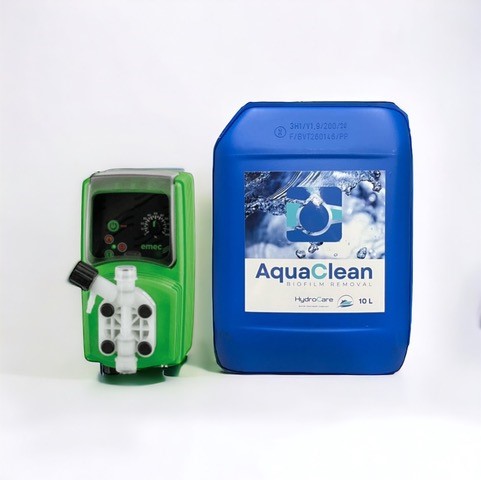
Oxidative water treatment relies on controlled oxidation reactions to inactivate microorganisms and degrade organic contaminants. Oxidising agents generate reactive oxygen species (ROS) that disrupt essential cellular structures while enhancing biofilm penetration and reducing microbial regrowth. Process efficiency depends on oxidant dosage, contact time, pH, temperature and system hydraulics.
UV-C Disinfection
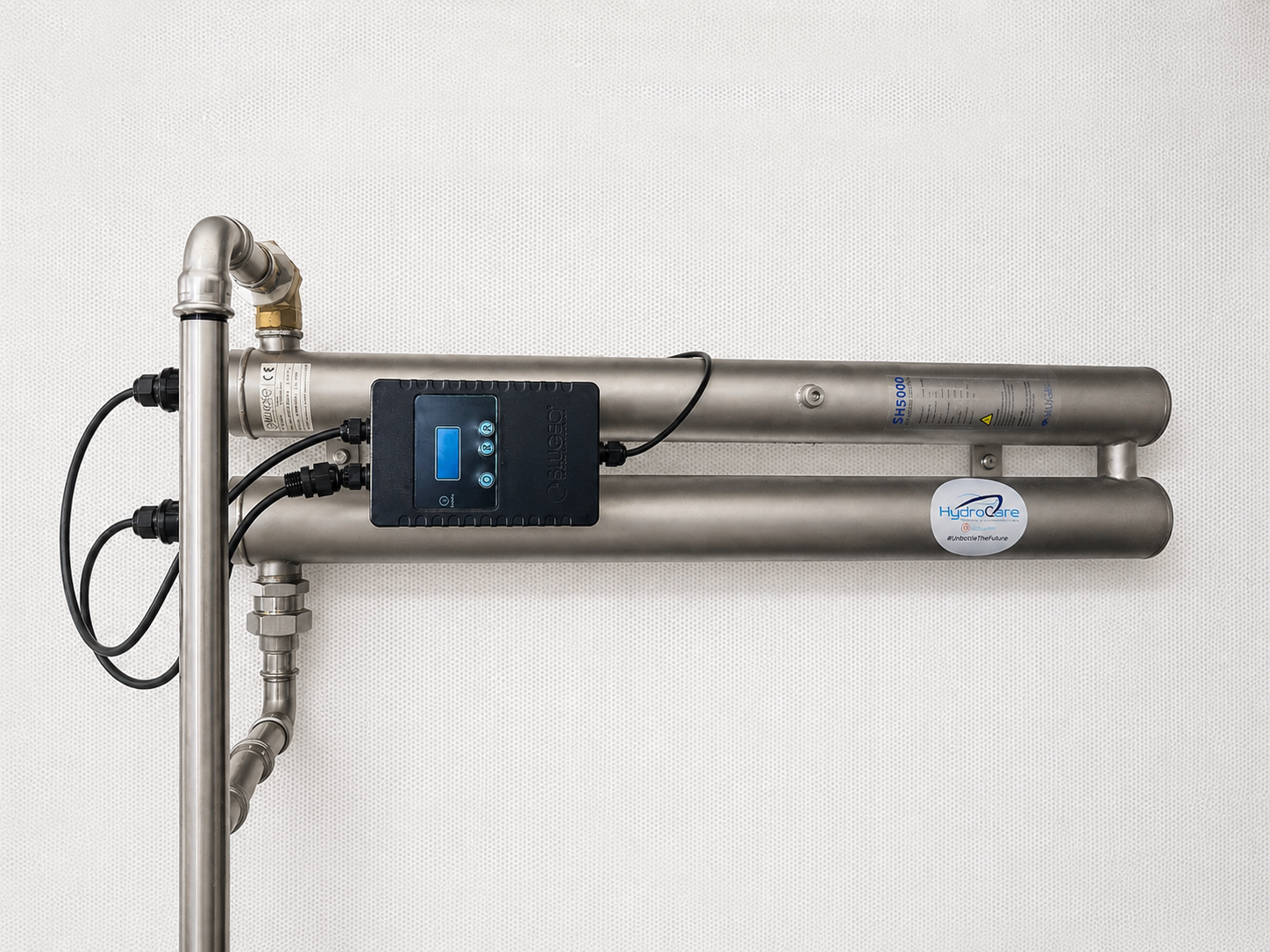
UV-C disinfection uses ultraviolet light at a germicidal wavelength of approximately 254 nm to inactivate microorganisms by inducing photochemical damage to their DNA and RNA. This prevents replication and renders bacteria, viruses and protozoa non-infectious without the addition of chemicals. Treatment efficiency depends on UV dose (mJ/cm²), water transmittance (UVT), flow rate and reactor design. As UV provides no residual disinfectant, it is often combined with secondary disinfection to ensure microbiological protection throughout the distribution system.
Silver Ion Disinfection
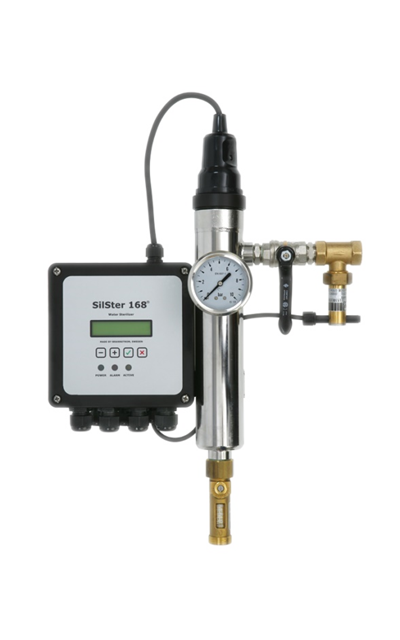
Silver ion disinfection is an electrochemical water treatment technology that releases controlled concentrations of silver ions (Ag⁺) into potable water systems. Silver ions interact with bacterial cell membranes, enzymes and nucleic acids, disrupting essential metabolic processes and inhibiting microbial replication. The technology provides long-lasting residual antimicrobial protection throughout storage tanks and distribution networks while preserving the taste, odour and appearance of the water. Treatment performance depends on maintaining the appropriate silver ion concentration, water chemistry and hydraulic retention time.